

Expert vitreo-retinal care for diabetic retinopathy, retinal detachment, macular degeneration, and all posterior segment eye disorders — with precision diagnostics and minimally invasive surgery.
High-resolution retinal cross-sections
Diagnosis & treatment plan
Go home same day
Fellowship-trained specialists
Dr. Rajesh Mehta is a fellowship-trained vitreo-retinal surgeon with over 15 years of exclusive retina practice in Mumbai. Trained at some of India's most prestigious institutions, he brings world-class expertise to every patient encounter.
At Mumbai Retina Doc, our core belief is simple: every patient deserves to understand their condition fully and leave the clinic with clarity, confidence, and a personalised care plan — not just a prescription.
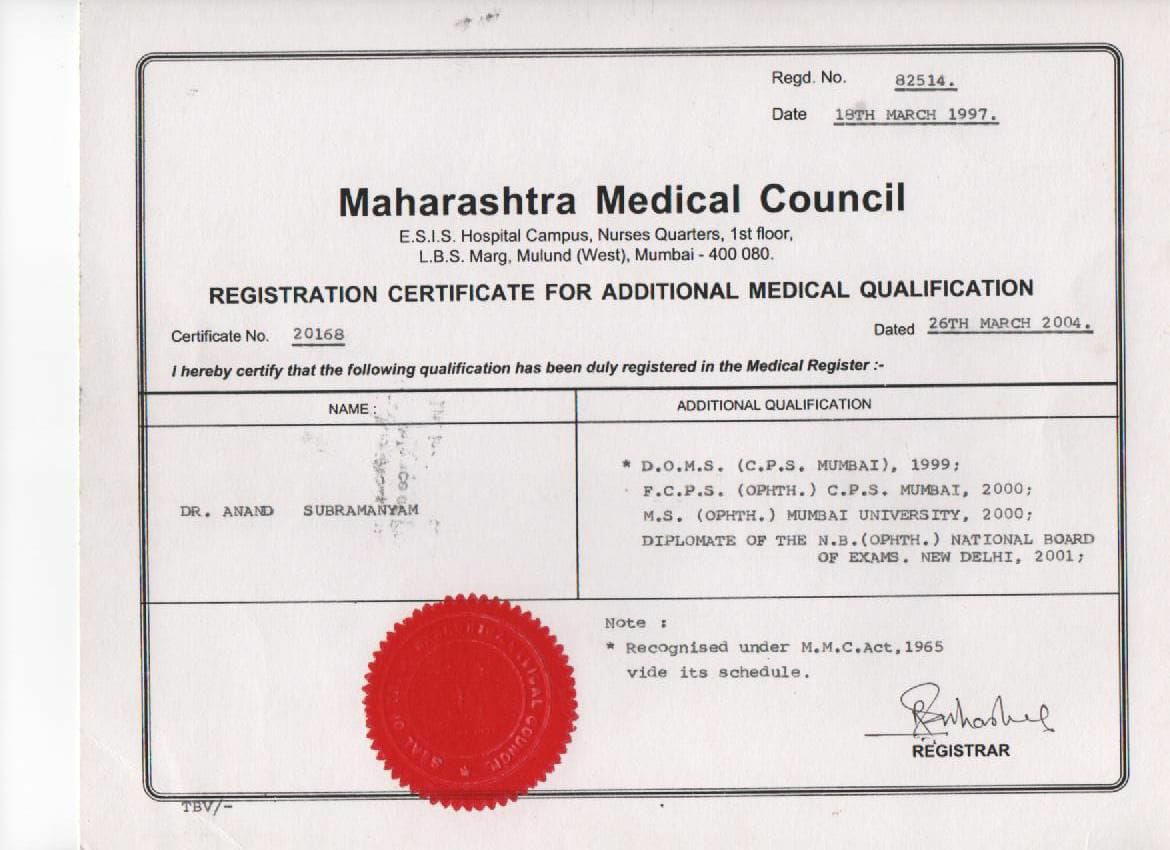
MBBS — Seth GS Medical College & KEM Hospital, Mumbai (2004)
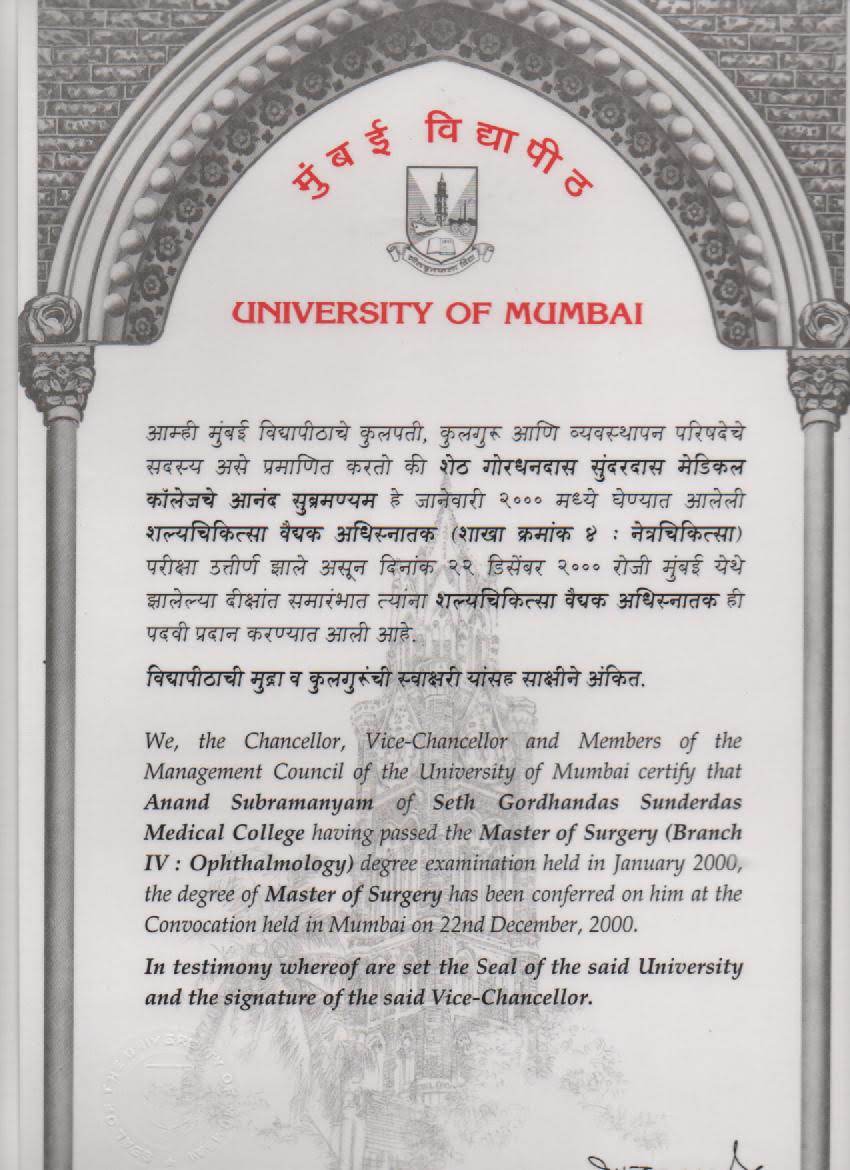
MD Ophthalmology — All India Institute of Medical Sciences (AIIMS), New Delhi (2007)
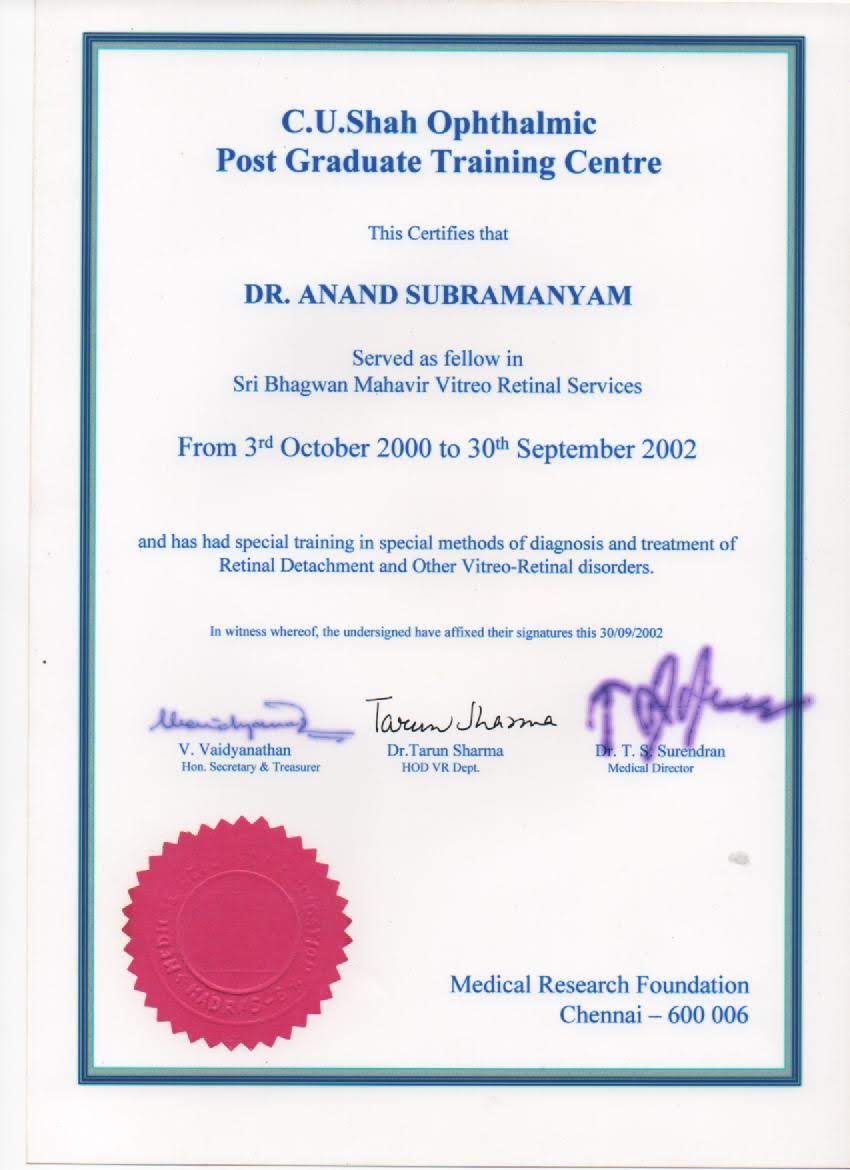
Vitreo-Retinal Fellowship — Sankara Nethralaya, Chennai (2009)
International Training — Moorfields Eye Hospital, London & Jules Stein Eye Institute, UCLA
Member — Vitreoretinal Society of India (VRSI) & American Academy of Ophthalmology (AAO)
From diagnosis to surgery, every step of your retinal care is managed under one roof by our specialist team.
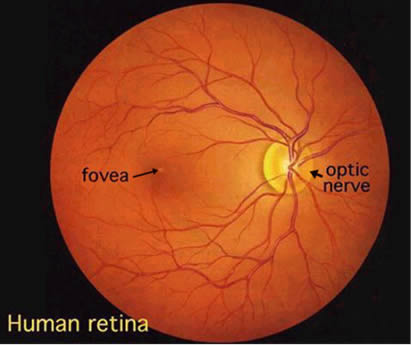
Comprehensive retinal examination using OCT (Optical Coherence Tomography), Fundus Fluorescein Angiography (FFA), and wide-field fundus photography. Get detailed, precise maps of your retinal health in a single visit.
Non-invasive · Same DayComplete management of diabetic eye disease — from screening and laser photocoagulation to intravitreal anti-VEGF injections and vitrectomy surgery for advanced cases involving vitreous haemorrhage or tractional detachment.
Medical & SurgicalUrgent surgical repair of retinal detachments using pneumatic retinopexy, scleral buckle, or pars plana vitrectomy. Early intervention is critical — our emergency surgical team is available 7 days a week.
Emergency AvailableSpecialised treatment for age-related macular degeneration (wet and dry AMD), macular holes, epiretinal membranes, and myopic macular degeneration — with the latest anti-VEGF therapies and microsurgical techniques.
Anti-VEGF · SurgeryPrecise, pain-minimised intravitreal injection therapy using Ranibizumab, Bevacizumab, Aflibercept, and dexamethasone implants. Administered in our sterile procedure room with meticulous infection-control protocols.
Outpatient · 15 MinExpert management of uveitis and ocular inflammatory disorders — including anterior, intermediate, posterior, and pan-uveitis. Comprehensive workup, systemic coordination, and targeted immunosuppressive therapy where indicated.
Medical ManagementRetinal conditions can progress rapidly. Early intervention saves vision. Don't wait if you notice sudden changes in your eyesight.
Damage to blood vessels in the retina caused by long-standing diabetes. Can cause vision loss if untreated. Affects 1 in 3 diabetic patients.
When the retina peels away from the back of the eye. A sight-threatening emergency. Warning signs include sudden flashes and floaters.
Progressive deterioration of the macula causing loss of central vision. Wet AMD can be treated with injections to preserve and restore sight.
A small break in the macula — the central area responsible for sharp, detailed vision. Vitrectomy surgery has a high success rate of over 90%.
Bleeding into the vitreous — the jelly-like substance inside the eye. Causes sudden vision loss. Often related to diabetic eye disease or retinal tears.
A thin layer of scar tissue over the macula causing distorted vision. Treated with vitrectomy when causing significant visual impairment.
Blockage of the veins draining the retina, causing sudden painless vision loss, macular oedema, and possible neovascularisation if untreated.
Inflammation of the uveal tract. Can affect vision permanently if poorly controlled. Requires systemic evaluation and targeted treatment.
Heidelberg Spectralis OCT
High-definition retinal cross-section imaging with 7µm axial resolution
Ultra-Widefield Fundus Camera
200° single-capture view covering up to 80% of the retinal surface
FFA — Fundus Fluorescein Angiography
Dynamic blood flow mapping to detect leakage, ischaemia & neovascularisation
ALCON Constellation Vitrectomy System
25G/27G micro-incision vitrectomy for minimally invasive posterior surgery
Humphrey Visual Field Analyser
Automated perimetry for glaucoma screening and neuro-ophthalmology
Our investment in the latest diagnostic and surgical technology means more accurate diagnoses, better surgical outcomes, and shorter recovery times for our patients.
We treat only posterior segment disorders — this singular focus means deeper expertise, sharper skills, and better outcomes than general eye clinics.
Every consultation is unhurried. You leave understanding your condition, your options, and your treatment plan — never confused or anxious.
World-class retinal procedures — including intravitreal injections, angiographies, and vitrectomy — offered at costs accessible to all patients.
Retinal detachments and sudden vision loss are surgical emergencies. Our team is available 7 days a week for urgent cases requiring immediate attention.
"Doctor took 40 minutes explaining my diabetic retinopathy to me with diagrams. I finally understood what was happening to my eyes after 3 years of confusion at other clinics. The injection was virtually painless."
"I woke up with flashes and floaters on a Sunday. They saw me within two hours, diagnosed a retinal tear, and did laser treatment the same evening. I cannot thank them enough — my vision is completely saved."
"My mother had wet AMD and was losing her central vision rapidly. After 4 injections over 6 months here, her vision has stabilised and actually improved slightly. The genuine care shown by the entire team is exceptional."
"Had vitrectomy surgery for a macular hole. Went in at 8am and was home by 2pm. The surgical team was incredibly reassuring. Three months later my vision has improved from 6/60 to 6/9. Truly world-class care."
"As a cardiologist myself, I was impressed by the systematic and evidence-based approach. The doctor explained my retinal vein occlusion thoroughly, discussed treatment options honestly, and respected my medical background. Outstanding."
"I've been coming here for uveitis management for two years. The doctor monitors me closely, coordinates with my rheumatologist, and adjusts treatment precisely. My inflammation has been well-controlled throughout. I trust this clinic completely."
Whether you have a referral or are seeking a second opinion, we welcome all patients. Appointments are usually available within 48 hours.
+91 98765 43210
+91 22 2345 6789
506, Signature Business Park
Postal Colony Road, Chembur East
Mumbai – 400 071
Monday – Saturday: 9:00 AM – 7:00 PM
Sunday: 10:00 AM – 1:00 PM (Emergencies only)
appointments@mumbairetinadoc.com
info@mumbairetinadoc.com
Our team will confirm your appointment within 2 hours by phone. For urgent cases, please call us directly on +91 98765 43210.
No referral is needed. You can book directly with us. However, if you have reports, prescriptions or previous imaging from other doctors, please bring them along — they help us give you a more thorough assessment.
A full retina consultation typically takes 1.5 to 2.5 hours. Your pupils will be dilated for examination, which takes 30–45 minutes to take effect. Please plan your visit accordingly and arrange transport, as you should not drive after pupil dilation.
With proper topical anaesthetic drops and our careful technique, most patients feel only minimal pressure or discomfort — not pain. The injection itself takes only a few seconds. Patients are often surprised at how comfortable the experience is.
We accept most major cashless insurance schemes including Star Health, HDFC Ergo, Max Bupa, Medi-assist, and government schemes including CGHS. Please call us before your visit to confirm your specific policy. We also offer transparent self-pay packages.
Most retinal detachment surgeries are performed under local anaesthesia with intravenous sedation, making the procedure very comfortable. General anaesthesia is used in specific complex cases or at the patient's preference. The procedure is typically done as daycare — no overnight hospital stay.
All diabetic patients should have a dilated retinal examination at least once a year, even if they have no visual symptoms. Those with established diabetic retinopathy may require checks every 3–6 months. Early detection dramatically improves treatment outcomes.
Seek urgent care for: sudden vision loss in one eye, a curtain or shadow across your vision, a sudden increase in floaters or flashes of light, or distortion of straight lines. These can indicate retinal tears, detachment, or vascular occlusions — all time-sensitive emergencies.
Dry AMD has no cure currently, but nutritional supplements (AREDS2 formula) can slow progression. Wet AMD, while not curable, can be very effectively controlled with regular anti-VEGF injections — many patients maintain stable or even improved vision for years with consistent treatment.